IMPACT
IMPACT
Music lives at the center of human culture. It shapes identity, carries memory, and connects us across language, geography, and ideology. Classical music and opera, in particular, transcend barriers in ways few other art forms can. It opens minds, expands dialogue, and strengthens the emotional fabric that binds us together.
Yet at this pivotal moment in history, music’s role in society is being quietly diminished.
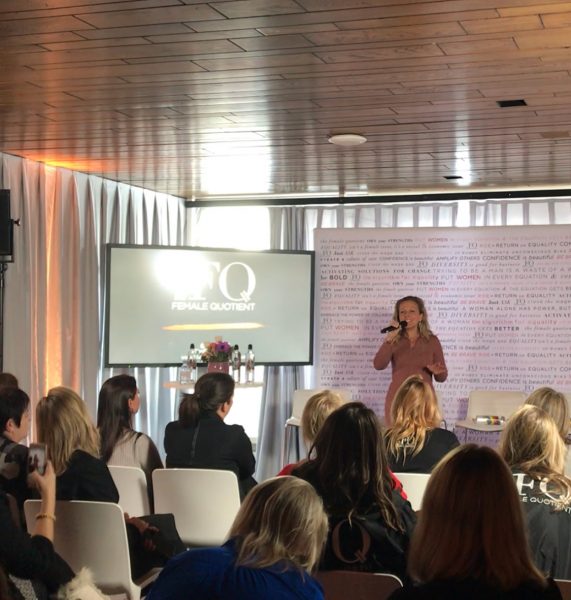
For several years, I have been building awareness about the power and necessity of music on global stages, including the World Economic Forum in Davos, Conversations at the Milken Institute Global Conference, Music X Summit, and the Horasis Global Meeting. Across industries and continents, one theme is clear: as we accelerate into an AI and digital dominant future, we risk losing essential human depth.
The fourth industrial revolution has reshaped how we live, work, and connect. Our virtual lives expand opportunity, yet they also distance us from embodied, shared experiences. Live classical music does the opposite. It gathers us. It roots us. It reconnects us to ourselves and to one another in ways that are profound and irreplaceable.
We are at a critical inflection point.
Since the 1990s, music education and public presence have suffered from budget cuts and shifting media priorities in the United States. Europe is now experiencing similar funding reductions in the arts. The consequences are measurable—and cultural. When music recedes from education and public life, we lose more than performance; we lose cognitive development, emotional fluency, and social cohesion.
Music is not an ornamental accessory for the upper class. It is fundamental to the fabric of what makes us deeply human.
The Impact Begins Before Birth
My understanding of music’s power is not only professional, but also is deeply personal. While expecting my first daughter, I researched the impact of music on prenatal emotional development and mother-child bonding. At the time, I was performing Rigoletto. After she was born, in the loud and overwhelming first hours of life, I began humming “Caro nome.” She immediately calmed and began to feed. The melody she had heard in utero became her anchor in the world outside.
Music benefits begin before we take our first breath.
Education: Wiring the Brain for Life
When children learn an instrument, the brain ignites. Neural pathways multiply rapidly. Coordination, precision, emotional intelligence, memory, and discipline develop simultaneously. The data is compelling: children engaged in learning music consistently demonstrate stronger academic performance, enhanced athletic coordination, improved communication skills, and greater emotional regulation.
Music education does not compete with other disciplines, rather it strengthens them all.
Adulthood: Focus, Resilience, and Connection
In adult life, music becomes both regulator and catalyst. Listening to music measurably reduces cortisol levels, lowering stress and enhancing clarity. It sharpens focus, fuels ambition, and restores emotional balance.
Live performance goes further. Shared musical experiences access visceral emotional layers that are otherwise difficult to reach. Great music can release grief, process pain, and create catharsis. It can also generate collective joy, binding audiences together in a rare form of communal emotional alignment.
In an increasingly fragmented world, this matters.
Longevity, Medicine, and Memory
Music’s magic extends into later life and medical care. For individuals living with Parkinson’s disease, dementia, and other neurological conditions, music therapy can unlock memory, stimulate coordinated movement, and reduce symptoms in ways that are both natural and profound. In many cases, music complements—and sometimes reduces reliance on—traditional medical interventions.
Across the entire human lifespan, music strengthens cognition, emotional well-being, and physical resilience.
Building the Future of Music
Rather than distancing myself from my parallel career in finance, I am embracing it. That experience, combined with my life in opera, has shaped a broader vision for systemic change.
Together with my husband, innovator and investor David Berry, I founded the Dudochkin Berry Initiative to restore music to its rightful place in society. Our mission is to eliminate the outdated perception of classical music as elitist, expand access and engagement, and democratize its profound benefits for all communities.
We believe music must be treated as an essential cultural infrastructure in the modern era. Fully integrated into education, innovation ecosystems, healthcare, and public discourse.
The future will be digital and we wish to ensure it remains deeply human.
I invite you to learn more about the Dudochkin Berry Initiative and join us in shaping a future where music is central in our culture, our health, and our shared humanity.

Music is at the heart of culture. We are naturally drawn to it and have a very personal relationship with it. While we all appreciate it in different ways, it can really affect us unlike anything else. The magic of classical music and opera cuts across all differences and language barriers in ways that allow for open thoughts, open minds, open hearts and open dialogue. Classical music and opera are essential to all. Music can heal–sometimes even better than medicine.
Today we are experiencing a rapid shift in our society. The 4th industrial revolution has been reshaping society at large, bringing a virtual and a digital lifestyle which both expands opportunities and puts at risk of losing touch with ourselves as individuals, as people, as societies. When we experience classical music together especially in a live performance environment, we engage in our deepest selves, we connect to ourselves and each other in this experience in a deeper way. It is the heart of our culture and our humanity. We need to shape how this core will be defined in our modern era and how it will evolve going forward. We need to bring classical music back into the fabric of our society.
I am driven to define the role of classical music and opera in the innovation-driven, digital world we live in. I’m leading efforts to restore classical music to where it should be –eliminate its elitist reputation; expand it’s appreciation and engagement; democratize its benefits and opportunity for all; In the world of virtual and digital lives, we need to strengthen and define our culture as a modern generation that has the foundational human depth that classical music has anchored for generations.
Listen to Yelena's interview on "Conversations With Today's Top Thinkers"
Music X Summit
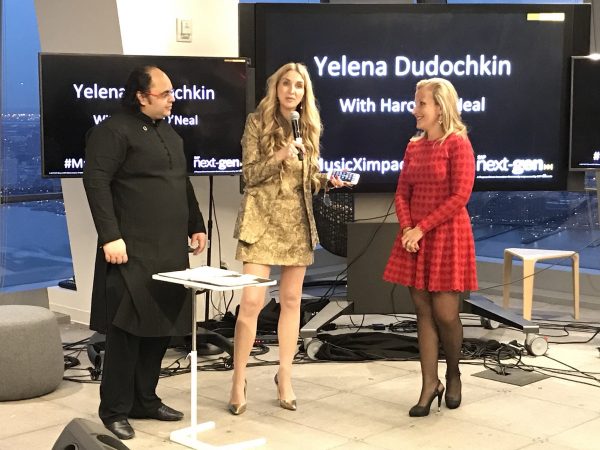
Yelena was a featured speaker at the first ever Music X Summit at the Leonardo Center for Innovation in New York City. Her performance talk inspired appreciation for opera and classical music, dispelling the elitist reputation of the art forms. Music connects us to ourselves, our community and to humanity. The standing ovation enthusiastically reminded that there’s great beauty and power in classical music that needs to be shared with the world. This is particularly important amid the 4th industrial revolution. Yelena spoke to address the necessary changes needed to ensure innovation for the future of classical music.
World Economic Forum in Davos 2018
Yelena performed at the World Economic Forum in Davos in January 2018 where she sang and demonstrated the power of music to connect with ourselves and with a greater purpose. The audience of world and industry leaders included many amazing women with the Female Quotient in the Equity Lounge. Inspiring awareness and further conversations about the importance of classical music.